Posts

Showing posts with the label divinity

Reviving Monotheism: Exploring Tensions within Monarchical Trinitarianism
Image
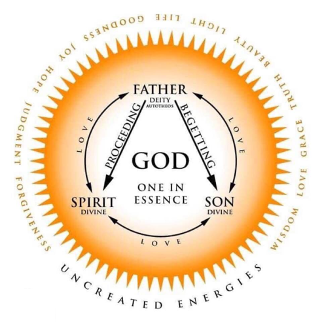
Reviving Monotheism: Exploring Tensions within Monarchical Trinitarianism     According to Monarchical Trinitarianism, the Father’s existence is fundamental while the Son and the Spirit have a derivative status as the Father grounds their existence yet they share the same essence such that they exemplify what it takes to predicate divinity (excluding aseity it seems). Therefore, when they refer to there being only one God they are referring to the one fundamental divine person who is the Father while there are three divine persons and therefore “monotheistic” as they are defining monotheism as the existence or worship of one fundamental divine person. Therefore, in one sense there are three Gods as there are three divine persons but in another sense there is one God as there is one fundamental divine person. However, the Monarchical Trinitarian is equivocating on the term, “God”. To be God one must have all the qualities that are necessary and sufficient to be God. If there ar...

Unveiling the Divine: Duns Scotus vs Aquinas on God’s Attributes

Image
Unveiling the Divine: Duns Scotus vs Aquinas on God’s Attributes Discussions about the nature of God have captivated the minds of scholars, theologians, and philosophers for centuries. One perspective is that of John Duns Scotus, a medieval thinker whose ideas on the attributes of God have set him apart from many of his contemporaries, including the renowned Thomas Aquinas. In this blog post, heavily inspired by Jake Brancatella ’ s dialogue on the subject, we will delve into Duns Scotus' intriguing beliefs about God's attributes, examining how they diverge from Aquinas' understanding. Duns Scotus believed that God has real attributes that are not identical to each other nor to His essence yet they are inseparable from each other and the essence. They are not free floating entities apart from God. God cannot exist without them nor can they exist without God. At least in the Sunni Athari position, when it is said that God cannot exist without His attribute and His attributes...

Early Christian Heresies

Image
Early Christian Heresies Throughout the history of Christianity, various theological controversies and debates have given rise to heretical beliefs that deviate from the orthodox teachings of the faith. These heresies often concern profound questions regarding the nature and person of Jesus Christ, the Trinity, and the relationship between the divine and the human. Understanding these heresies is important for gaining insights into the development and refinement of Christian doctrine. In this exploration, we will delve into several ancient Christian heresies, their founders, and the core beliefs they entail. Arianism: Founder: Arius (256-336 CE) Belief: Arianism taught that Jesus Christ, the Son of God, was a created being and therefore subordinate to God the Father. According to Arius, there was a time when the Son did not exist.   Gnosticism: Founders: Various Gnostic teachers (1st-3rd centuries CE) Belief: Gnosticism encompassed various beliefs, but in general, it held that salv...

God and Aseity

Image
God and Aseity      Can God not be a se , or lack the property of aseity? Aseity is the attribute whereby a being is said to exist of or from itself. A necessary being exists in all possible worlds. Therefore, it is an analytic a priori that is impossible for the necessary being not to exist. I would argue that aseity is a necessary attribute of God and to lack aseity entails that that being cannot be God.      In the traditional conception of the Trinity, only the Father is a se since the other two persons, the Son and Holy Spirit are eternally begotten or proceed from the Father. If this were the case, then the divine nature does not entail aseity as each of the persons are fully God yet two of the three persons do not have the attribute in question. Rather it is a hypostatic property of the Father alone. However, this brings the question, would there be another essence, an a se essence, which is not the divine essence? For example, if there is nothing ...

Wills in the Trinity and Incarnation

Image
                                                                       Wills in the Trinity and Incarnation             How many wills are present in the Trinity? Some claim that there is one will amongst the three persons, Father, Son, and Holy Spirit, while others claim each person has their own will but their wills are necessarily in agreement with each other. One can define personhood in the Trinity as distinct centers of knowledge, love, will, and action in an individual mental substance with intentionality and consciousness. With this definition, it seems to be the case that will is a property of personhood rather than nature. To account for the change in personal identity overtime, it is posited that man has a soul...

Notes on the basics of Islam

Image
 Notes on Islam      The word Muslim is an active participle of Islam and Muslim means someone who submits to God’s will with the intention of creating peace, or salam .       Islam can be summarized in the Hadith or saying of the Prophet Muhammad relating to his conversation with the angel Gabriel,  “It is narrated on the authority of Yahya b. Ya'mur that the first man who discussed qadr (Divine Decree) in Basra was Ma'bad al-Juhani. I along with Humaid b. 'Abdur-Rahman Himyari set out for pilgrimage or for 'Umrah and said: Should it so happen that we come into contact with one of the Companions of the Messenger of Allah (peace be upon him) we shall ask him about what is talked about taqdir (Divine Decree). Accidentally we came across Abdullah ibn Umar ibn al-Khattab, while he was entering the mosque. My companion and I surrounded him. One of us (stood) on his right and the other stood on his left. I expected that my companion would authoriz...