Posts

Showing posts with the label analytical

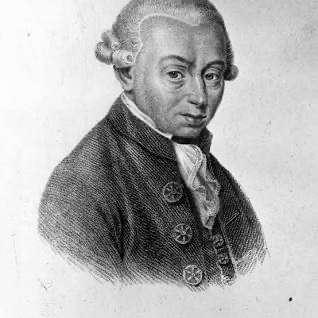
Notes on Immanuel Kant Part 3
Image
Notes on Immanuel Kant Part 3              Kant attempted to synthesize the rationalist and empiricist tradition since he said that Hume had awakened him from his “dogmatic slumber”. Rationalists like Descartes and Ibn Sina believed that there is knowledge that is a priori or independent from experience while empiricists like Hume and Locke believed the opposite. Hume was critical of the traditional notion of causation, arguing that the belief in cause and effect is not grounded in reason but rather in custom and habit. He argued that there is nothing in the cause that necessitates the occurrence of the effect. In other words, one may observe one event regularly following another, but there is no inherent connection or power in the cause that compels the effect to happen. A rationalist, on the other hand, would contend that knowledge of cause and effect is, at least in part, a priori—that is, independent of experience. Kant argued that...

Ibn Taymiyyah's Critique of Polytheism

Image
Ibn Taymiyyah's Critique of Polytheism In the seminal work Dalail Tawhid al-Rububiyah , Ibn Taymiyyah embarks on a rigorous intellectual journey, dissecting and critiquing the very foundations of polytheism. Ibn Taymiyyah’s argument against polytheism, or the idea of multiple all-powerful Gods is as follows: If there exists two equal creators of the world, they must be equally powerful or have power to create. Furthermore, they must be either powerful on their own or powerful only with the other. Ibn Taymiyyah explains that the latter option is an impossibility because if neither has power when existing on their own then either something occurs when they exist together that does not occur when each is on their own or nothing occurs. The first possibility is impossible as,  “If some power that does not exist when each marker is on his own occurs when both are existing together, this power will either occur from the two makers themselves or occur from another. But both are impossible...

Is God Always the Creator?: Exploring Divine Attributes

Image
  Is God Always the Creator?: Exploring Divine Attributes Has God always been The Creator? This question arose in my mind while reading Dr. William Lane Craig’s book, Time and Eternity: Exploring God’s Relationship to Time , as on page 88 he states,  “Thomas agrees with premise (3). On his view, relations between God and creatures, such as God’s being Lord over the world, first began to exist at the moment at which creatures come into being.” The context of this quote was whether God is temporal or timeless. Craig argues that since the beginning of creation, God is temporal as creating necessitates new relations that He previously did not have. An extrinsic change within God necessitates temporality. However, my inquiry is regarding whether God is “Lord over the world” regardless if creation exists. Surely, all rational souls agree that God is Lord when creation exists but how about before? Some argue that God became a creator as soon as He created and thus some attributes of ...

Thomistic Divine Simplicity: A God in Time?

Image
  Thomistic Divine Simplicity: A God in Time? Discussions about the nature of God and time have intrigued theologians and philosophers for centuries, with various viewpoints shaping our understanding of the divine. One such perspective, deeply rooted in the thought of Thomas Aquinas, is the doctrine of divine simplicity. According to the doctrine of divine simplicity, there is no composition or change in God’s essence. For example, we may understand God to have the attributes of being merciful or loving or omnipotent, however these attributes are identical to each other and identical to His essence, according to Thomas Aquinas. The distinction between these attributes arrive from our mental conception of them as it is only a virtual not a formal distinction. In other words, God is a pure and eternal act of existence. This is not the only view of divine simplicity, for example both the Sunni Athari and Catholic Franciscan traditions hold that God’s attributes are truly distinct wit...

Unveiling the Divine: Duns Scotus vs Aquinas on God’s Attributes

Image
Unveiling the Divine: Duns Scotus vs Aquinas on God’s Attributes Discussions about the nature of God have captivated the minds of scholars, theologians, and philosophers for centuries. One perspective is that of John Duns Scotus, a medieval thinker whose ideas on the attributes of God have set him apart from many of his contemporaries, including the renowned Thomas Aquinas. In this blog post, heavily inspired by Jake Brancatella ’ s dialogue on the subject, we will delve into Duns Scotus' intriguing beliefs about God's attributes, examining how they diverge from Aquinas' understanding. Duns Scotus believed that God has real attributes that are not identical to each other nor to His essence yet they are inseparable from each other and the essence. They are not free floating entities apart from God. God cannot exist without them nor can they exist without God. At least in the Sunni Athari position, when it is said that God cannot exist without His attribute and His attributes...

Descartes' Ontological Argument: From Radical Doubt to the Existence of a Supreme Being

Image
Descartes' Ontological Argument: From Radical Doubt to the Existence of a Supreme Being      Descartes’ argument is grounded in what is predicated of God. For example, the predicate of existence is derived from idea of a supremely perfect being and such a being must have the predicate of being a necessary existence. Descartes often compares his ontological argument to a geometric demonstration by arguing that necessary existence cannot be excluded from idea of God any more than having three sides can be excluded from the idea of a triangle. Therefore, the existence of God is ‘a priori’ for Descartes, or is axiomatic, or known without experience. It seems like it is a counterfactual dependence, or by definition. For example, if one has a pair of birds, it is by definition that if there is one bird, there must be another to complete the pair. In the same way, if there is a supremely perfect being, it must have the predicate of necessary existence otherwise there would be a ...

Exploring Kantian Ethics: The Moral Implications of Lies of Omission

Image
Exploring Kantian Ethics: The Moral Implications of Lies of Omission Recently, I've been contemplating a philosophical dilemma revolving around lies of omission, or  when someone intentionally withholds relevant information, leading the other person to believe something untrue , and whether they align with Kant's principles of deontological ethics (read my blog post on Kant for background information). As per lying, Kant believes one can never lie no matter the time or circumstance due to the categorical imperative: Act according to the maxim that you would wish all other rational people to follow, as if it were a universal law. If lying is made a universal law then society would collapse and therefore lying is immoral. Therefore, when the axe murderer asks Kant for his prey, Kant would have to tell the murderer (but maybe this is a gross oversimplification that will be explained later). However, what would Kant's position be on lies of omission (if it is even a thing?)? On...

Overview of Athari Metaphysics

Image
Overview of Athari Metaphysics Metaphysics, the study of the fundamental nature of reality and existence, presents significant challenges and complexities. Within the realm of metaphysics, the Athari, a school of thought in Sunni Islam, perspective offers a unique approach to understanding the attributes and actions ascribed to Allah, or God. This overview explores the fundamental principles of their (and also my) metaphysics, including the distinction between the different types of predications when describing God’s attributes. It also considers the role of rational arguments alongside textual proofs for the existence of God and questions the concept of Divine Simplicity. Additionally, the overview delves into the uncreated nature of the Quran and the understanding of God's actions within His essence. By examining Athari metaphysics, we gain insights into the nuanced interpretation of divine attributes and deepen our understanding of God’s unknowable essence. The Athari view d...