Posts

Showing posts with the label ontology

Omnipotence and Omniscience Paradoxes Refuted
Image
Omnipotence and Omniscience Paradoxes Refuted     Paradoxes are apparent and not actual contradictory realities such that there is an argument to sustain it without contradicting the laws of logic. Therefore, the conclusion of a paradox seems illogical on the surface but the argument to back it is logical. One of the most famous paradoxes presented in the theological realm is the Paradox of the Stone also known as the Omnipotence Paradox. Paradoxes in theology attempt to create tension in their conception of God through an apparent contradiction such that it could be possible to accept absurd conclusions about the divine nature. This may be with positing there is a contradiction within God’s omnipotence or it could be with multiple attributes or an attribute with our human experience of the world such as the Problem of Evil existing with God being infinitely merciful (this is refuted in a different blog post). In this case, the Paradox of the Stone is an example of the first t...

On The Existence of God: An Ontological Argument From Necessary Truth

Image
On The Existence of God: An Ontological Argument From Necessary Truth E is evidence for H if and only if it raises the probability for it to be true. God is a conscious thinking mind. God is an eternal agent and a being that performs actions, is the creator of all, and is the foundation for all knowledge and truth. There must be a necessary being and this has been proven extensively in my other blog articles through different cosmological and ontological arguments. This article will prove that the necessary being must be God through a different type of ontological argument presented by Jake Brancatella in his debate against Aron Ra.   Argument from Necessary Truth:   P1: Necessarily either the Law of Noncontradiction (states that contradictory propositions cannot both be true in the same sense at the same time) is true or it is not. P2: P1 is necessarily true and could not fail to be true. P3: True propositions exist. C1: Therefore, at least one true proposition exists necessa...

Ibn Taymiyya on Essence and Existence

Image
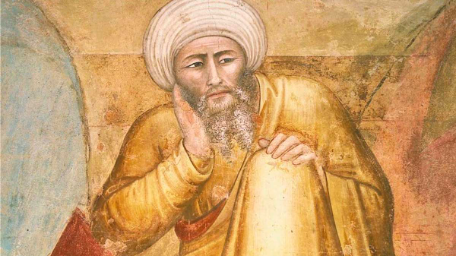
Ibn Taymiyya on Essence and Existence   Ibn Taymiyya argues that the notion of  “essence” only exists in the mind and does not have an independent existence outside the mind. For any externally existing object, its essence and reality are synonymous and include all its attributes essential for its existence. The mind can conceive of an object’s essence separate from its existence, but only occurs in the mind and cannot in the external world. Therefore, there is no ontological difference between its existence and what it fundamentally is. In other words, an entity’s existence, including all attributes, defines its essence and constitutes its ontological reality in the external world. Furthermore, he argues that while objects are composed of matter and have a specific form, their form does not exist independently. According to Ibn Taymiyya, the only entity that exists in the external world is the material object itself with its specific form. The form cannot exist separately an...

God and Aseity

Image
God and Aseity      Can God not be a se , or lack the property of aseity? Aseity is the attribute whereby a being is said to exist of or from itself. A necessary being exists in all possible worlds. Therefore, it is an analytic a priori that is impossible for the necessary being not to exist. I would argue that aseity is a necessary attribute of God and to lack aseity entails that that being cannot be God.      In the traditional conception of the Trinity, only the Father is a se since the other two persons, the Son and Holy Spirit are eternally begotten or proceed from the Father. If this were the case, then the divine nature does not entail aseity as each of the persons are fully God yet two of the three persons do not have the attribute in question. Rather it is a hypostatic property of the Father alone. However, this brings the question, would there be another essence, an a se essence, which is not the divine essence? For example, if there is nothing ...

The Contingency Argument: A Case for God – A Summarization of Mohammed Hijab’s Londoniyyah Lecture

Image
 The Contingency Argument: A Case for God – A Summarization of Mohammed Hijab’s Londoniyyah Lecture      “There cannot be a world with only dependent thing(s) without reference to an independent thing, as dependent thing(s) cannot continue existing on their own. Existence is only explicable with reference to an independent existence. This is because impossible existences do not exist by logical necessity, and dependent existences cannot self-generate and/or self-maintain.”       All things belong the categories of independent or dependent, a third option cannot exist. Dependency can be defined as something that relies on something else for its existence. There is a difference between causation and dependency. For example, a mother may ‘cause’ her child to exist but if the mother were to stop existing, the child still exists i.e. the child is not ‘dependent’ on the mother. A telephone’s battery requires a charger and therefore depends on it. A huma...

The Beginning for the Rational Basis for God

Image
The Rational Basis for God  “My argument against God was that the universe seemed so cruel and unjust. But how had I got this idea of just and unjust? A man does not call a line crooked unless he has some idea of a straight line. What was I comparing this universe with when I called it unjust?” – C.S. Lewis      Can the belief in a God be proven rationally i.e. without the use of scripture but based on pure logic i.e. natural theology and if yes what can be shown about God through this method? Starting with the Kalam Cosmological Argument, it begins with the following premises, which is whatever begins to exist has a cause, the universe began to exist, therefore, the universe has a cause. For this to work for an argument for a God, the God has to be eternal meaning that God does not follow the first premise as that applies to things that began to exist which cannot be the case if something is eternal. If the Big Bang Theory is ignored as an explanation for the seco...