Posts

Showing posts with the label hinduism

Notes on the Basics of Schopenhauer
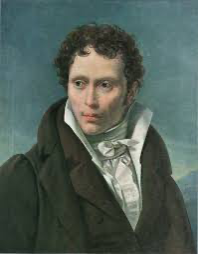
Image
Notes on the Basics of Schopenhauer         Arthur Schopenhauer (1788-1860) was a German philosopher known for his pessimistic philosophy which is exemplified in his work, “The World as Will and Representation”. Schopenhauer’s metaphysics drew from Kant whom I have several blog posts on but in short, Kant believed in the Noumena-Phenomena distinction or Transcendental Idealism. Phenomena are the things we perceive through our senses which are shaped by our mind’s faculties and subject to the categories of understanding. Noumena, on the other hand, are things as they are in themselves that are beyond human perception and conceptualization. Kant argues that while we can understand phenomena through empirical investigation, we can never truly know noumena because they lie beyond the limits of human cognition. Thus, noumena represent the realm of things as they exist independently of our perception that are ultimately unknowable. Since we can never know the t...
An Explanation of Reincarnation in Hinduism

Image
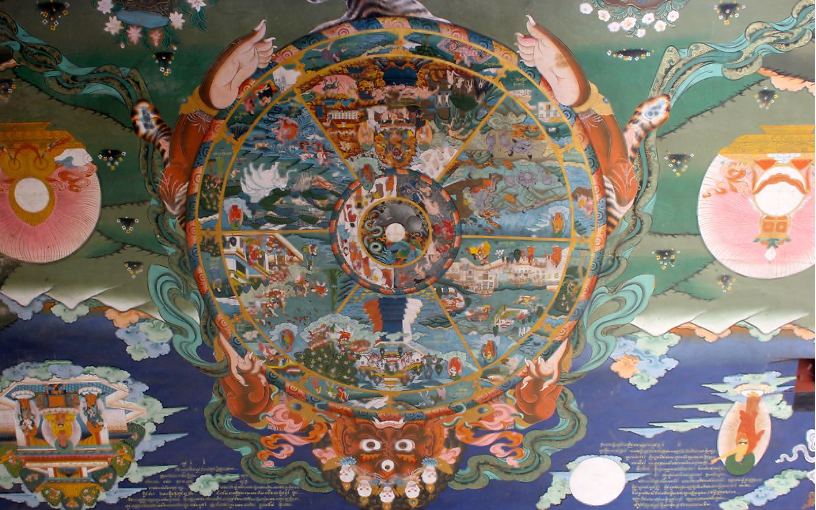
An Explanation of Reincarnation in Hinduism   “Just as the embodied soul continuously passes from childhood to youth to old age, similarly, at the time of death, the soul passes into another body. The wise are not deluded by this.” (Bhagavad Gita 2:13)            The soul that animates the body will survive while the body does not according to Hinduism. This next body will be destined by the actions in their previous life and this is the concept of karma. Good intent and actions lead to a good future while bad intent and actions lead to a bad future. But what is exactly the soul? Is it the Atman? The Atman is identified with the consciousness of the human being that is all-pervasive amongst all that exists. The Atman is eternal reality, indestructible, and bliss and is identified with Brahman or God who is the true reality of everything. However, since the Atman is everywhere and unchanging and is in all beings, it is not the one that ...

Exploring Monism in Kantian Philosophy and Schopenhauer’s Will Through Advaita Vedanta

Image
Exploring Monism in Kantian Philosophy and Schopenhauer’s Will Through Advaita Vedanta     This blog post explores monism within Kantian philosophy and Schopenhauer’s concept of the “Will” through drawing parallels with Advaita Vedanta, a school of thought in Hinduism, as the title suggests. In Kant's philosophy, the noumena, or the “thing-in-itself” represents the ultimate reality of objects independent of our perceptions. Kant argued that we can never have direct knowledge of the noumenal realm because our knowledge is necessarily mediated by the structure of our minds and senses. This is explored much more in-depth in my other blog posts on the basics of Kant. While we can perceive and understand phenomena—how things appear to us—the nature of the noumena remains inaccessible. Kant posited that our experiences are shaped by the 12 categories of the understanding and the forms of intuition, and these mental structures impose limitations on what we can know about the underl...

The Dialectical History of Religion

Image
The Dialectical History of Religion Welcome to the intriguing world of the Dialectical History of Religion! To know what a dialectic is, refer to my blog post on Hegel. This unique framework traces the evolution of the major world religious thought through a series of dialectical relationships, unveiling the interplay between opposing ideas and their harmonious synthesis. Divided into three branches, this historical journey invites us to explore the dynamic nature of human spirituality. This is only a draft and much work is needed to be done! Let me know where I can improve in the comments below.   1. First Branch: Thesis: Eclectic Spirituality Antithesis: Nihilism Synthesis: Animism Thesis: Animism Antithesis: Materialism Synthesis: Shamanism Thesis: Shamanism Antithesis: General Atheism Synthesis: General Deism Thesis: General Deism Antithesis: General Polytheism Synthesis: Monotheism* Thesis: Monotheism Antithesis: Ancient Paganism Synthesis: Judaism Thesis: Judaism Antithesis: ...

The basics of Qualified Non-Dualism

Image
Qualified Non-Dualism       There are many schools of thought in Hinduism regarding the relationship of the Ātman , jiva , and Brahman . These three terms can be loosely translated to the self-existent essence of humanity, the worldly self or soul, and the underlying reality of everything, respectively. In nondualist schools of Hinduism, particularly in Shankara’s Advaita Vedanta or nondualism and Ramanuja’s Vishishtadvaita Vedanta or qualified nondualism, the Ātman is equated with Brahman . They derive this understanding primarily from the Hindu scripture, the Upanishads , which are the last part of a larger corpus of texts known as the Vedas . There are differences between these two schools of thought and the primary focus of this essay will be the school of Ramanuja.  According to both these schools of thought, although more explicit with Shankara, this world is an illusion or māyā and to be under this illusion is the ignorance that keeps the individ...