Posts

Showing posts with the label a priori

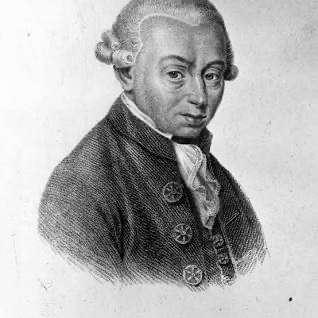
Notes on Immanuel Kant Part 3
Image
Notes on Immanuel Kant Part 3              Kant attempted to synthesize the rationalist and empiricist tradition since he said that Hume had awakened him from his “dogmatic slumber”. Rationalists like Descartes and Ibn Sina believed that there is knowledge that is a priori or independent from experience while empiricists like Hume and Locke believed the opposite. Hume was critical of the traditional notion of causation, arguing that the belief in cause and effect is not grounded in reason but rather in custom and habit. He argued that there is nothing in the cause that necessitates the occurrence of the effect. In other words, one may observe one event regularly following another, but there is no inherent connection or power in the cause that compels the effect to happen. A rationalist, on the other hand, would contend that knowledge of cause and effect is, at least in part, a priori—that is, independent of experience. Kant argued that...

Descartes' Ontological Argument: From Radical Doubt to the Existence of a Supreme Being

Image
Descartes' Ontological Argument: From Radical Doubt to the Existence of a Supreme Being      Descartes’ argument is grounded in what is predicated of God. For example, the predicate of existence is derived from idea of a supremely perfect being and such a being must have the predicate of being a necessary existence. Descartes often compares his ontological argument to a geometric demonstration by arguing that necessary existence cannot be excluded from idea of God any more than having three sides can be excluded from the idea of a triangle. Therefore, the existence of God is ‘a priori’ for Descartes, or is axiomatic, or known without experience. It seems like it is a counterfactual dependence, or by definition. For example, if one has a pair of birds, it is by definition that if there is one bird, there must be another to complete the pair. In the same way, if there is a supremely perfect being, it must have the predicate of necessary existence otherwise there would be a ...

Exploring Kantian Ethics: The Moral Implications of Lies of Omission

Image
Exploring Kantian Ethics: The Moral Implications of Lies of Omission Recently, I've been contemplating a philosophical dilemma revolving around lies of omission, or  when someone intentionally withholds relevant information, leading the other person to believe something untrue , and whether they align with Kant's principles of deontological ethics (read my blog post on Kant for background information). As per lying, Kant believes one can never lie no matter the time or circumstance due to the categorical imperative: Act according to the maxim that you would wish all other rational people to follow, as if it were a universal law. If lying is made a universal law then society would collapse and therefore lying is immoral. Therefore, when the axe murderer asks Kant for his prey, Kant would have to tell the murderer (but maybe this is a gross oversimplification that will be explained later). However, what would Kant's position be on lies of omission (if it is even a thing?)? On...

Kalam Cosmological Argument - Unraveling the Origins of the Universe

Image
Kalam Cosmological Argument - Unraveling the Origins of the Universe                In the annals of philosophical and theological discourse, the Kalam Cosmological Argument has transcended time as a formidable line of reasoning. With its roots tracing back to the works of renowned Islamic philosopher, Al-Ghazali, and later embraced and championed by modern Christian philosopher, William Lane Craig, this argument has withstood the test of centuries and continues to captivate minds seeking to comprehend the enigma of the universe's inception. Rooted in two fundamental premises, as we embark on this intellectual journey, we shall unravel the mysteries of existence and delve into the timeless wisdom of the past, blending it with contemporary insights to grasp the essence of this perplexing argument.   Premise 1: Whatever begins to exist has a cause. Premise 2: The universe began to exist. Conclusion: Therefore the universe has a cause. ...

Overview of Athari Metaphysics

Image
Overview of Athari Metaphysics Metaphysics, the study of the fundamental nature of reality and existence, presents significant challenges and complexities. Within the realm of metaphysics, the Athari, a school of thought in Sunni Islam, perspective offers a unique approach to understanding the attributes and actions ascribed to Allah, or God. This overview explores the fundamental principles of their (and also my) metaphysics, including the distinction between the different types of predications when describing God’s attributes. It also considers the role of rational arguments alongside textual proofs for the existence of God and questions the concept of Divine Simplicity. Additionally, the overview delves into the uncreated nature of the Quran and the understanding of God's actions within His essence. By examining Athari metaphysics, we gain insights into the nuanced interpretation of divine attributes and deepen our understanding of God’s unknowable essence. The Athari view d...

God and Aseity

Image
God and Aseity      Can God not be a se , or lack the property of aseity? Aseity is the attribute whereby a being is said to exist of or from itself. A necessary being exists in all possible worlds. Therefore, it is an analytic a priori that is impossible for the necessary being not to exist. I would argue that aseity is a necessary attribute of God and to lack aseity entails that that being cannot be God.      In the traditional conception of the Trinity, only the Father is a se since the other two persons, the Son and Holy Spirit are eternally begotten or proceed from the Father. If this were the case, then the divine nature does not entail aseity as each of the persons are fully God yet two of the three persons do not have the attribute in question. Rather it is a hypostatic property of the Father alone. However, this brings the question, would there be another essence, an a se essence, which is not the divine essence? For example, if there is nothing ...

Mathematical a priori Statements

Image
  Mathematical a priori Statements       A triangle having three sides and angles equaling 180 degrees is an analytic a priori since the predicate of 3 sides and 180 degrees are in the word triangle. The equation, 2+2=4, would be a synthetic a priori because the concept of four is not present in two.       In the case of a triangle having three sides and angles equaling 180 degrees, the concept of a triangle already contains within it the idea of having three sides and angles adding up to 180 degrees. All three-sided polygon has 180 degrees and all triangles are three-sided polygons by definition. Therefore, the truth of this statement is considered analytic a priori, as it is true by definition and can be known independently of experience unless it can be proven otherwise.        On the other hand, in the case of 2+2=4, the concept of four is not contained within the concept of two. Rather, the truth of this statemen...

Basics of Kant part 2

Image
 Basics of Kant part 2      Kantian metaphysics is based on the distinction between analytic and synthetic judgments, as well as between a priori and a posteriori knowledge. According to Kant, analytical judgments are those in which the predicate is contained in the subject, and their truth is known by definition. Synthetic judgments, on the other hand, add something to the subject that is not contained in it, and their truth is not immediately evident from the concept alone. A priori knowledge is independent of experience and is known through reason alone, while a posteriori knowledge is derived from experience. Moral judgments, according to Kant, are a priori. Morality is concerned with practical questions - not with the ways things are, but with the way things ought to be. Since experience tells us only about the way things are, it cannot by itself provide an answer to our practical questions. Moral judgments are also synthetic rather than analytic, for if they we...

Notes on the basics of Hegel

Image
Notes on Hegel “The truth is the whole”. Dialectics takes on several different meanings in philosophy. To look at a proposition, a thesis, and to find its opposite, the antithesis, and to combine them to create a brand-new idea, the synthesis, therefore the truth is the whole, a dynamic thinking. Truth is not found in isolated concepts or ideas, but in their relation to the broader context of reality or history. This idea is central to his dialectical method. Hegel's philosophy, dialectics is a method for resolving contradictions or oppositions within concepts or ideas. It involves a process of negation, sublation, and synthesis that is more complex than just finding an opposite and combining it. Hegel believed that history is the story of the geist , or absolute spirit, moving through human affairs and what mankind has become made aware of. The spirit is not a passive observer of history, but an active force that drives its development for self-expression or freedom. Hegel being...