Posts

Showing posts with the label will

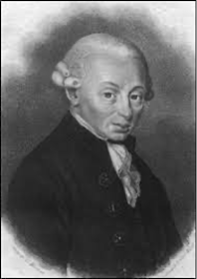
Notes on the Basics of Kant 4: Kantian Ethics Explained
Image
Notes on the Basics of Kant 4: Kantian Ethics Explained According to Kant, in his, Groundwork on the Metaphysics of Morals , there is only one thing that is good in itself which is The Good Will. Everything else has to be qualified, The Good Will is the only good without qualification. While other things can be good, The Good Will is good in itself. Being intelligent can be a good thing but one could also use their intelligence for evil if The Good Will is not present. Courage can be good to save someone out of a burning building but a thief can have courage when robbing a bank. Being healthy can be good but without having a Good Will they can spoil the individual with pride. Having good virtues such as moderation is a step in the right direction but they need to be directed by having a Good Will. Jeremy Bentham would say that the Good Will is that which leads to the best consequences or utility for the greatest number of people. However, according to Kant it is not about the effect b...
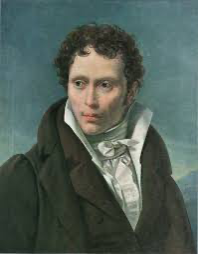
Notes on the Basics of Schopenhauer

Image
Notes on the Basics of Schopenhauer         Arthur Schopenhauer (1788-1860) was a German philosopher known for his pessimistic philosophy which is exemplified in his work, “The World as Will and Representation”. Schopenhauer’s metaphysics drew from Kant whom I have several blog posts on but in short, Kant believed in the Noumena-Phenomena distinction or Transcendental Idealism. Phenomena are the things we perceive through our senses which are shaped by our mind’s faculties and subject to the categories of understanding. Noumena, on the other hand, are things as they are in themselves that are beyond human perception and conceptualization. Kant argues that while we can understand phenomena through empirical investigation, we can never truly know noumena because they lie beyond the limits of human cognition. Thus, noumena represent the realm of things as they exist independently of our perception that are ultimately unknowable. Since we can never know the t...

Kantian Idealism and the Quest for Ultimate Reality

Image
Kantian Idealism and the Quest for Ultimate Reality   I pondered over Kant and his philosophy of transcendental idealism and then contemplated Descartes and discovered they have significant overlap. Kant claimed we cannot know the world in itself i.e. the noumena but only have knowledge of the world as it appears to us i.e. the phenomena. Then I drew a parallel of this idea to Descartes’ radical doubt which claimed that we cannot know if the external world exists or not, but the one thing we have epistemological certainty of is Cogito Ergo Sum or I think therefore I am. The overlap being lack of true knowledge of the external world. Then I thought about how religion can be incorporated. It is explicit in Descartes that the external world is clear through his faith in God through his ontological argument but for Kant such a thing is absurd as he believes philosophizing about God is beyond the scope of what philosophy can accomplish and therefore he rejects cosmological and ontologi...

Exploring Monism in Kantian Philosophy and Schopenhauer’s Will Through Advaita Vedanta

Image
Exploring Monism in Kantian Philosophy and Schopenhauer’s Will Through Advaita Vedanta     This blog post explores monism within Kantian philosophy and Schopenhauer’s concept of the “Will” through drawing parallels with Advaita Vedanta, a school of thought in Hinduism, as the title suggests. In Kant's philosophy, the noumena, or the “thing-in-itself” represents the ultimate reality of objects independent of our perceptions. Kant argued that we can never have direct knowledge of the noumenal realm because our knowledge is necessarily mediated by the structure of our minds and senses. This is explored much more in-depth in my other blog posts on the basics of Kant. While we can perceive and understand phenomena—how things appear to us—the nature of the noumena remains inaccessible. Kant posited that our experiences are shaped by the 12 categories of the understanding and the forms of intuition, and these mental structures impose limitations on what we can know about the underl...