Posts

Showing posts with the label vedanta

Notes on the Basics of Schopenhauer
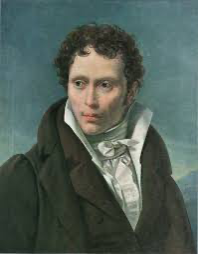
Image
Notes on the Basics of Schopenhauer         Arthur Schopenhauer (1788-1860) was a German philosopher known for his pessimistic philosophy which is exemplified in his work, “The World as Will and Representation”. Schopenhauer’s metaphysics drew from Kant whom I have several blog posts on but in short, Kant believed in the Noumena-Phenomena distinction or Transcendental Idealism. Phenomena are the things we perceive through our senses which are shaped by our mind’s faculties and subject to the categories of understanding. Noumena, on the other hand, are things as they are in themselves that are beyond human perception and conceptualization. Kant argues that while we can understand phenomena through empirical investigation, we can never truly know noumena because they lie beyond the limits of human cognition. Thus, noumena represent the realm of things as they exist independently of our perception that are ultimately unknowable. Since we can never know the t...

The basics of Qualified Non-Dualism

Image
Qualified Non-Dualism       There are many schools of thought in Hinduism regarding the relationship of the Ātman , jiva , and Brahman . These three terms can be loosely translated to the self-existent essence of humanity, the worldly self or soul, and the underlying reality of everything, respectively. In nondualist schools of Hinduism, particularly in Shankara’s Advaita Vedanta or nondualism and Ramanuja’s Vishishtadvaita Vedanta or qualified nondualism, the Ātman is equated with Brahman . They derive this understanding primarily from the Hindu scripture, the Upanishads , which are the last part of a larger corpus of texts known as the Vedas . There are differences between these two schools of thought and the primary focus of this essay will be the school of Ramanuja.  According to both these schools of thought, although more explicit with Shankara, this world is an illusion or māyā and to be under this illusion is the ignorance that keeps the individ...