Posts

Showing posts with the label universe

Proving the God Hypothesis: Aquinas and Al Kindi

Image
Proving the God Hypothesis: Aquinas and Al Kindi     The quest to prove the existence of God has inspired profound philosophical reflections throughout history. Among the notable thinkers who engaged in this pursuit, Thomas Aquinas stands as a prominent figure in Christian theology and Al Kindi in the Islamic tradition. This blog post will present their arguments for God however without explanation. For an in-depth explanation of Al Kindi’s argument read William Lane Craig’s The Kalām Cosmological Argument , and for Aquinas read his Summa Theologica : First Part, Question 2, Article 3 and A History of Philosophy, Vol. 2: Medieval Philosophy - From Augustine to Duns Scotus by Frederick Copleston.   Thomas Aquinas (1225-1274 CE):   The First Way – Argument From Motion   P1. Our senses prove that some things are in motion. P2. Things move when potential motion becomes actual motion. P3. Only an actual motion can convert a potential motion into an actual motion. P4...
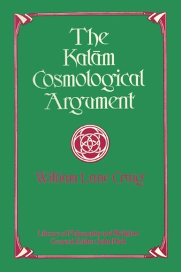
William Lane Craig’s Refutation of the Worst Objections Against the Kalam Cosmological Argument

Image
William Lane Craig’s Refutation of the Worst Objections against the Kalam Cosmological Argument     In this blog post, we delve into the Kalam Cosmological Argument, an argument for the existence of God championed by Dr. William Lane Craig. This blog post will both present what Dr. Craig considers to be the worst objections to the argument and refute them. While he refutes 10 arguments, I will only present 3 since I believe the other 7 are too erroneous to even entertain. The Kalam Cosmological Argument is as follows: P1. Everything that begins to exist has a cause P2. The universe began to exist C. Therefore, the universe has a cause.   The first objection I would like to present is: 1. The argument commits the fallacy of equivocation. In the first premise “cause” refers to a “material cause”, while in the conclusion it does not. An example of the fallacy of equivocation is as follows: 1. Greek is a language 2. Socrates is Greek 3. Therefore, Socrates is a ...