Posts

Showing posts with the label logos

Spinoza: Secret Stoic Philosopher?
Image
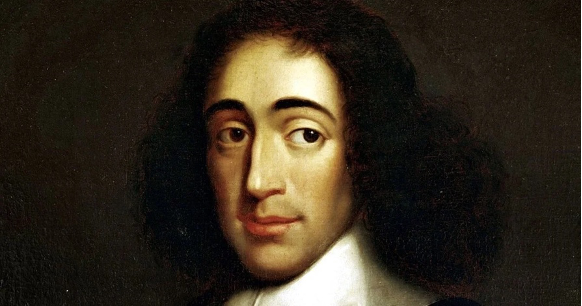
Spinoza: Secret Stoic Philosopher?         I was reading about Baruch Spinoza, a 17th-century philosopher who proposed a philosophy known as Spinozism or pantheism, and I found a lot of parallels between his philosophy and Stoicism that I wanted to share. For more information about the Stoic philosophy read my blog post for necessary background context: https://zainphilosophy.blogspot.com/2023/11/notes-on-basics-of-stoicism.html Spinoza argued for a monistic view of reality where God and nature are ontologically synonymous. Spinoza’s main work titled, “Ethics” explores concepts like substance, modes, and the interconnectedness of all existent things. He argued for a deterministic universe i.e. that there is no free will and emphasized the importance of reason and understanding emotions to achieve intellectual freedom. There are similarities between Spinoza’s philosophy and the Stoic concept of the logos. In Stoicism, the logos represents a rational and di...
The Paradox of Multiplicity in Divine Simplicity

Image
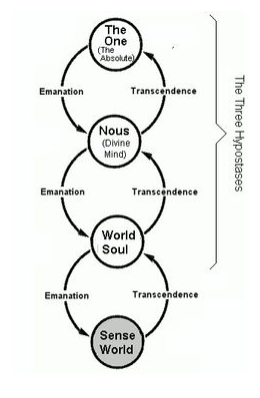
The Paradox of Multiplicity in Divine Simplicity According to many Aristotelian philosophers, all bodies have the inseparable property of motion and it does not proceed from the nature of bodies themselves and thus motion demands an external source or a prime mover. The series of moving causes must stop at an immovable object that moves everything else to avoid an infinite regress of movers. This first mover is God. Since the transition from non-existence to existence is a form of motion and motion requires matter then God must be immaterial and eternal while all things created by it are material and in motion. God is free from matter and therefore is free from motion and therefore cannot change and therefore is pure act ( actus purus ) and also therefore God must be completely simple as God is not made of parts. Now the question is in regards to creation, how can the many be created by one or how can something like God who is completely simple create multiplicity or how can a single c...

Trinitarian Dynamics: Exploring Divine Processions and Relations in Thomistic Theology

Image
Trinitarian Dynamics: Exploring Divine Processions and Relations in Thomistic Theology     Under a Thomistic interpretation of Christianity, God the Father is the one who possesses the divine essence in an absolute sense such that he is unbegotten. Before all ages he has always been and will be an eternal act of communicating the divine essence out. Imagine having an idea about yourself, this idea is like you but it will not be exactly you due to human limitations of imagination and therefore, will not be a perfect image. However, God knows himself perfectly and he is the only thing that can possibly understand his own essence. In his act of understanding himself it will be a perfect image with the same essence as it will be identical as it will be a reflection of his essence. Therefore, the Son proceeds by way of knowing. Knowledge is a procession. The reason why it becomes a person is because it is the perfect image of the divine essence.       ...

The Christology of The Gospel of John

Image
The Christology of The Gospel of John   Jesus in the Gospel of John (we shall continue to call him John, though we do not know who wrote this book and this essay is not on the historicity of the Gospel) is traditionally presented as equal to God the Father in status before coming in the world as read in his famous prologue, “In the beginning was the Word ( Logos ), and the Word was with God, and the Word was God… The Word became flesh and made his dwelling among us. We have seen his glory, the glory of the one and only Son, who came from the Father, full of grace and truth.” (John 1:1,14) At the same time, he is not identical to the Father as when he talks to God he is clearly not talking to himself. Yet when he leaves the world after his resurrection at the end of the Gospel, his glory will be restored by God to be as it was before his incarnation as being God’s logos as a preexistent divine being. However, is the standard narrative true about the logos being equal to the Father?...

Notes on The Basics of Stoicism

Image
  Notes on The Basics of Stoicism     Stoicism is a school of Hellenistic philosophy that developed in Ancient Greece and Rome. For them, the only good that is worth striving for is virtue which is living in agreement with nature. But what does it mean to live in agreement with nature? There is no metaphysics in Stoicism as there is nothing beyond the material world. Even our souls and God or Zeus are composed of passive matter of a refined fire. Yet there is an active intelligent principle that orders the universe. The active principle that orders is the logos or a universal principle of reason or pneuma and is intelligent and identified with God which permeates everything. The whole of everything is in sympathy with itself as it extends throughout materially. Therefore, if reason is God which permeates through everything then nature itself is perfect and ordered deterministically that must be appreciated. Humans participate through having a rational mind. This is what i...