Posts

Showing posts with the label knowledge

Omnipotence and Omniscience Paradoxes Refuted
Image
Omnipotence and Omniscience Paradoxes Refuted     Paradoxes are apparent and not actual contradictory realities such that there is an argument to sustain it without contradicting the laws of logic. Therefore, the conclusion of a paradox seems illogical on the surface but the argument to back it is logical. One of the most famous paradoxes presented in the theological realm is the Paradox of the Stone also known as the Omnipotence Paradox. Paradoxes in theology attempt to create tension in their conception of God through an apparent contradiction such that it could be possible to accept absurd conclusions about the divine nature. This may be with positing there is a contradiction within God’s omnipotence or it could be with multiple attributes or an attribute with our human experience of the world such as the Problem of Evil existing with God being infinitely merciful (this is refuted in a different blog post). In this case, the Paradox of the Stone is an example of the first t...

Ibn Taymiyya’s Epistemology: The Fitra

Image
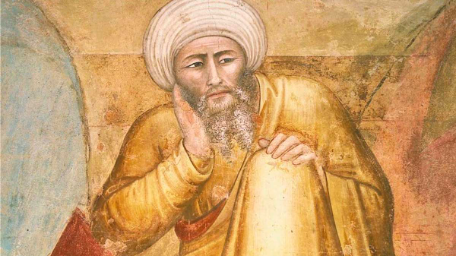
Ibn Taymiyya’s Epistemology: The Fitra   Ibn Taymiyya (1263-1328)’s epistemology is based on sense perception, reason, and report/revelation i.e. the Quran and Sunnah, with sense perception being the most straightforward as it provides and immediate sense of particulars while reason works with abstraction and inference. Therefore, he may be classified as an empiricist. However, the centerpiece of Ibn Taymiyya’s epistemology is the concept of the fitra. The fitra can be described as the natural disposition given to mankind created by God to recognize Him along with other a priori truths. Without the fitra, neither speculative reasoning would be possible, nor demonstration, discourse or language. Ibn Taymiyya allows that certain beliefs be sufficient for knowledge independent of inference with the fitra as the God given apparatus to do so. For Ibn Taymiyya, the best argument for the existence of God is not through syllogisms but through the signs recognized by the fitra. The syllogis...

The Hard Problem of Consciousness: A Question for Atheists

Image
The Hard Problem of Consciousness: A Question for Atheists           Consciousness proves that causes or things within the universe cannot be explained purely from a materialistic paradigm. The hard problem of consciousness tries to explain why or how materialism can produce consciousness. Under materialism, there is an unbridgeable gap between physical things and the emergence of consciousness within human beings. Materialism refers to the idea that all that exists is just matter and motion. Atoms and molecules are all that exist while the existence of God and angels are impossible as they are not physical objects. If you are reading this blog post then you have consciousness but what is consciousness? It is the first-person experience of the world; it is the ability to be aware of the fact that we are aware. A computer is not aware of its own existence nor of its experiences. The second part of consciousness can be described through the example of ...

Kantian Idealism and the Quest for Ultimate Reality

Image
Kantian Idealism and the Quest for Ultimate Reality   I pondered over Kant and his philosophy of transcendental idealism and then contemplated Descartes and discovered they have significant overlap. Kant claimed we cannot know the world in itself i.e. the noumena but only have knowledge of the world as it appears to us i.e. the phenomena. Then I drew a parallel of this idea to Descartes’ radical doubt which claimed that we cannot know if the external world exists or not, but the one thing we have epistemological certainty of is Cogito Ergo Sum or I think therefore I am. The overlap being lack of true knowledge of the external world. Then I thought about how religion can be incorporated. It is explicit in Descartes that the external world is clear through his faith in God through his ontological argument but for Kant such a thing is absurd as he believes philosophizing about God is beyond the scope of what philosophy can accomplish and therefore he rejects cosmological and ontologi...

Notes on the Basics of Hegel Part 2: Breakdown of the Phenomenology of Spirit

Image
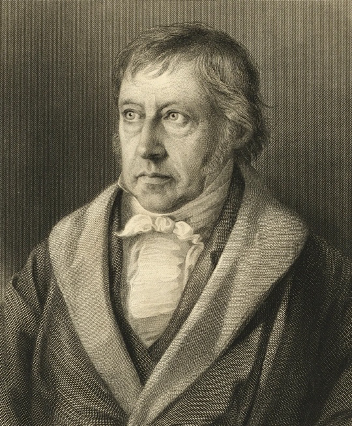
Notes on the Basics of Hegel Part 2: Breakdown of the Phenomenology of Spirit     Hegel began by outlining the purpose of the work, the need for a systematic study of consciousness and self-consciousness. He suggests that the goal is to understand the development of human knowledge and to grasp the truth of this knowledge. Hegel sought to understand the unfolding of human thought over time. He believed that history was a rational process, and by tracing the development of consciousness, one could grasp the inherent logic and progression of human knowledge. Hegel introduced a dialectical method, which involves the resolution of contradictions through a process of thesis, antithesis, and synthesis. This method allows for the dynamic development of thought, revealing the inherent contradictions within each stage and the synthesis that emerges. In examining consciousness and self-consciousness dialectically, Hegel reveals the internal conflicts and contradictions inherent in vari...