Posts

Showing posts with the label kalam

Ibn Taymiyyah on God’s Perpetual Creation

Image
Ibn Taymiyyah on God’s Perpetual Creation            This blog post explores Ibn Taymiyyah’s philosophical perspectives on God as it relates to creation and time. Drawing from Jon Hoover’s work, “The Muslim Theologian Ibn Taymiyyah on God, Creation, and Time,” we uncover Ibn Taymiyyah’s doctrine of perpetual creation.          Ibn Taymiyyah’s sophisticated philosophy agrees with al-Ghazali and the Kalam scholars that created objects are not eternal and that they come into existence after a period of non-existence. Only God is eternal and uncreated which led to Ibn Taymiyyah to reject Avicenna’s Neoplatonic concept of eternal emanation. There is no sequence of eternal intellects and souls flowing from God to the realm of generation and decay beneath the moon. Everything apart from God comes into existence after it did not exist.          However, Ibn Taymiyya...

Kantian Idealism and the Quest for Ultimate Reality

Image
Kantian Idealism and the Quest for Ultimate Reality   I pondered over Kant and his philosophy of transcendental idealism and then contemplated Descartes and discovered they have significant overlap. Kant claimed we cannot know the world in itself i.e. the noumena but only have knowledge of the world as it appears to us i.e. the phenomena. Then I drew a parallel of this idea to Descartes’ radical doubt which claimed that we cannot know if the external world exists or not, but the one thing we have epistemological certainty of is Cogito Ergo Sum or I think therefore I am. The overlap being lack of true knowledge of the external world. Then I thought about how religion can be incorporated. It is explicit in Descartes that the external world is clear through his faith in God through his ontological argument but for Kant such a thing is absurd as he believes philosophizing about God is beyond the scope of what philosophy can accomplish and therefore he rejects cosmological and ontologi...

William Lane Craig’s Refutation of the Worst Objections Against the Kalam Cosmological Argument

Image
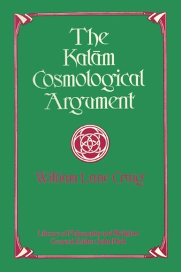
William Lane Craig’s Refutation of the Worst Objections against the Kalam Cosmological Argument     In this blog post, we delve into the Kalam Cosmological Argument, an argument for the existence of God championed by Dr. William Lane Craig. This blog post will both present what Dr. Craig considers to be the worst objections to the argument and refute them. While he refutes 10 arguments, I will only present 3 since I believe the other 7 are too erroneous to even entertain. The Kalam Cosmological Argument is as follows: P1. Everything that begins to exist has a cause P2. The universe began to exist C. Therefore, the universe has a cause.   The first objection I would like to present is: 1. The argument commits the fallacy of equivocation. In the first premise “cause” refers to a “material cause”, while in the conclusion it does not. An example of the fallacy of equivocation is as follows: 1. Greek is a language 2. Socrates is Greek 3. Therefore, Socrates is a ...

Kalam Cosmological Argument - Unraveling the Origins of the Universe

Image
Kalam Cosmological Argument - Unraveling the Origins of the Universe                In the annals of philosophical and theological discourse, the Kalam Cosmological Argument has transcended time as a formidable line of reasoning. With its roots tracing back to the works of renowned Islamic philosopher, Al-Ghazali, and later embraced and championed by modern Christian philosopher, William Lane Craig, this argument has withstood the test of centuries and continues to captivate minds seeking to comprehend the enigma of the universe's inception. Rooted in two fundamental premises, as we embark on this intellectual journey, we shall unravel the mysteries of existence and delve into the timeless wisdom of the past, blending it with contemporary insights to grasp the essence of this perplexing argument.   Premise 1: Whatever begins to exist has a cause. Premise 2: The universe began to exist. Conclusion: Therefore the universe has a cause. ...

The Beginning for the Rational Basis for God

Image
The Rational Basis for God  “My argument against God was that the universe seemed so cruel and unjust. But how had I got this idea of just and unjust? A man does not call a line crooked unless he has some idea of a straight line. What was I comparing this universe with when I called it unjust?” – C.S. Lewis      Can the belief in a God be proven rationally i.e. without the use of scripture but based on pure logic i.e. natural theology and if yes what can be shown about God through this method? Starting with the Kalam Cosmological Argument, it begins with the following premises, which is whatever begins to exist has a cause, the universe began to exist, therefore, the universe has a cause. For this to work for an argument for a God, the God has to be eternal meaning that God does not follow the first premise as that applies to things that began to exist which cannot be the case if something is eternal. If the Big Bang Theory is ignored as an explanation for the seco...