Posts

Showing posts with the label government

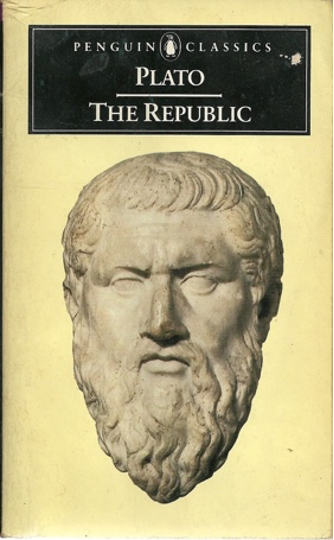
Plato’s The Republic Overview
Image
Plato’s The Republic Overview              The Republic is an ancient Greek dialogue by the philosopher, Plato, about Socrates’ discourses about justice, ethics, and creating an ideal society.   Book 1 Main Ideas: Socrates asks for a definition of justice and is met with three responses: 1. To give each what is owed to them. 2. To give to each what is appropriate to them. 3. Whatever is advantageous to the strongest. Socrates then attempts to refute each definition. For the first definition, Socrates gives an example of returning a weapon to a madman. While a knife may be what was owed to them before they lost their sanity, returning it to them may cause them to harm someone. For the second definition, if doing good to one’s friends is appropriate and acting the reverse to one’s enemies is harmful, but harming someone tends to make one unjust, then harming one’s enemies will lead to justice creating injustice. Furthermore...

Enlightenment Political Philosophy: Thomas Hobbes vs. John Locke vs. Rousseau

Image
  Enlightenment Political Philosophy: Thomas Hobbes vs. John Locke vs. Rousseau Beginning with Thomas Hobbes (1588-1679), he was in favor of governmental absolutism. He argued this through his social contract theory. Social contract theory tries to prove the legitimacy of government by explaining why people should give up their freedom. The burden of proof is on the state to show why people should obey rather than live naturally. According to Hobbes, human psychology is fundamentally driven by desire for pleasure and aversion from pain. Furthermore, morally what we call good is what gives pleasure and what we call bad is what causes pain. Yet, he also recognized that individuals each had their own pleasures and pains which can be distinct from others. The things that people sought, he called “passions” and thus life becomes the pursuit of passion. The means to achieve one’s passion is done through reason, which is calculated by looking at the pros and cons of the method of achiev...