Posts

Showing posts with the label forms

Aristotle’s Metaphysics Book Alpha Overview
Image
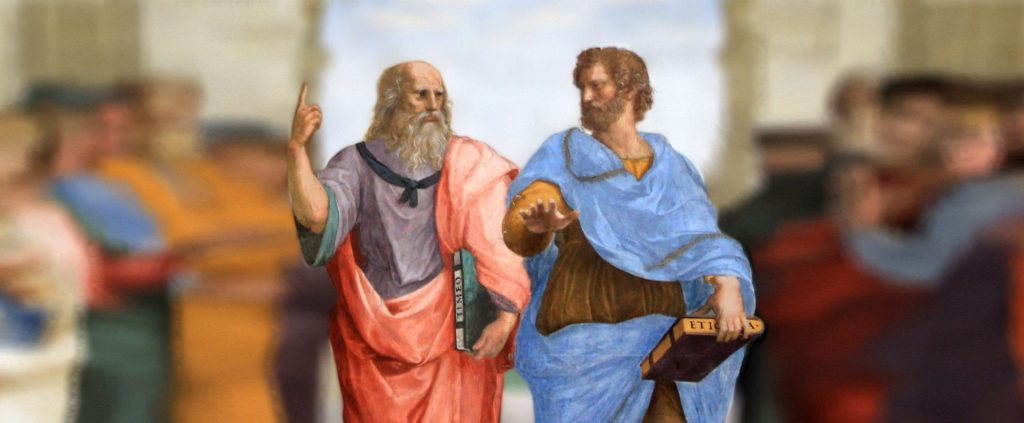
Aristotle’s Metaphysics Book Alpha Overview     According to Aristotle, there are four types of causes which all work together:   1. Formal Cause: It is the essence of a thing which makes it the type of thing that it is. It can also refer to the whole of the thing or its form. The form is the act which gives it its shape and identity while the matter is the potency which the thing is made out of. 2. Material Cause: The matter a thing is made out of. He criticized earlier philosophers like Thales and Heraclitus for limiting their explanations to only a material cause such as water and fire respectively. Relying solely on a material cause does not explain why or how something is the way it is. 3. Efficient Cause: What brings something into existence or produces it. A substrate itself does not cause itself to change or motion. There cannot be an infinite regress of efficient causes therefore there must be a prime mover or uncaused cause, God. Some poets like Hesiod...
Plato’s The Republic Overview

Image
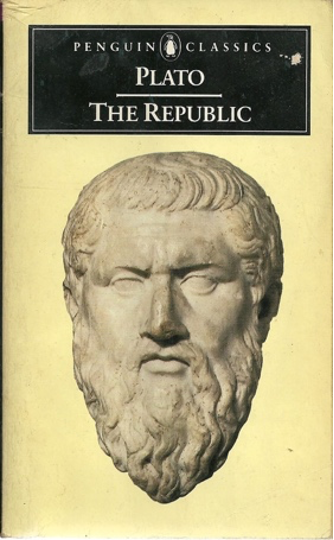
Plato’s The Republic Overview              The Republic is an ancient Greek dialogue by the philosopher, Plato, about Socrates’ discourses about justice, ethics, and creating an ideal society.   Book 1 Main Ideas: Socrates asks for a definition of justice and is met with three responses: 1. To give each what is owed to them. 2. To give to each what is appropriate to them. 3. Whatever is advantageous to the strongest. Socrates then attempts to refute each definition. For the first definition, Socrates gives an example of returning a weapon to a madman. While a knife may be what was owed to them before they lost their sanity, returning it to them may cause them to harm someone. For the second definition, if doing good to one’s friends is appropriate and acting the reverse to one’s enemies is harmful, but harming someone tends to make one unjust, then harming one’s enemies will lead to justice creating injustice. Furthermore...

Ibn Taymiyya on Essence and Existence

Image
Ibn Taymiyya on Essence and Existence   Ibn Taymiyya argues that the notion of  “essence” only exists in the mind and does not have an independent existence outside the mind. For any externally existing object, its essence and reality are synonymous and include all its attributes essential for its existence. The mind can conceive of an object’s essence separate from its existence, but only occurs in the mind and cannot in the external world. Therefore, there is no ontological difference between its existence and what it fundamentally is. In other words, an entity’s existence, including all attributes, defines its essence and constitutes its ontological reality in the external world. Furthermore, he argues that while objects are composed of matter and have a specific form, their form does not exist independently. According to Ibn Taymiyya, the only entity that exists in the external world is the material object itself with its specific form. The form cannot exist separately an...

Universals and Particulars

Image
Universals and Particulars  "In metaphysics, a universal is what particular things have in common, namely characteristics or qualities. In other words, universals are abstract repeatable or recurrent entities that can be instantiated or exemplified by many particular things."      The idea of universals and particulars is a long-lasting philosophical debate regarding whether there are certain concepts or properties that exist independently of individual objects/particulars or whether everything is particular and no such universal exists. The former describes Realism while the latter is known as Nominalism. In this blog article, an overview of Plato's, Aristotle's, Ibn Taymiyyah's, and the Nominalist view on the subject.       Plato believed that there were objective and eternal "Forms" that exist independently of the physical world or outside the cave according to his famous analogy. He believed that the physical world is just a mere reflection of...