Posts

Showing posts with the label divine simplicity

Dialogue with Aquinas: A Systematic Refutation of Divine Simplicity
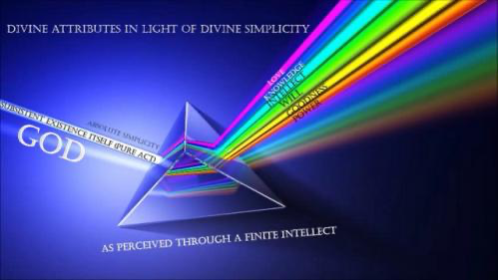
Image
Dialogue with Aquinas: A Systematic Refutation of Divine Simplicity     Introduction:            The Doctrine of Divine Simplicity (DS) has been held by the Church for centuries through the works of great theologians such as Augustine and Thomas Aquinas. However, under scrutiny it will be demonstrated that the doctrine has no legs to stand on. Firstly, a systematic articulation of DS will be provided for background context. Secondly, I will offer several objections and incoherencies that DS entails. Thirdly, I will provide a possible alternate solution to understanding the relationship between God’s attributes and essence. This essay-style blog post will replace all of my other blogs on the same subject as this is the synthesis of them.   Chapter I: What is Divine Simplicity? Divine simplicity (DS) is the idea that God's attributes are identical to each other in His reality. Attributes, for example, are love, wrath, know...
The Paradox of Multiplicity in Divine Simplicity

Image
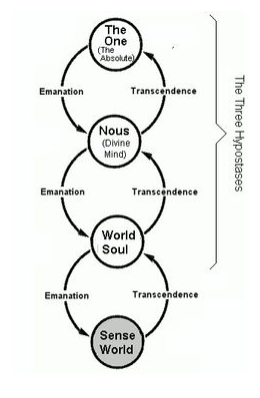
The Paradox of Multiplicity in Divine Simplicity According to many Aristotelian philosophers, all bodies have the inseparable property of motion and it does not proceed from the nature of bodies themselves and thus motion demands an external source or a prime mover. The series of moving causes must stop at an immovable object that moves everything else to avoid an infinite regress of movers. This first mover is God. Since the transition from non-existence to existence is a form of motion and motion requires matter then God must be immaterial and eternal while all things created by it are material and in motion. God is free from matter and therefore is free from motion and therefore cannot change and therefore is pure act ( actus purus ) and also therefore God must be completely simple as God is not made of parts. Now the question is in regards to creation, how can the many be created by one or how can something like God who is completely simple create multiplicity or how can a single c...

The Essence-Existence Distinction Under Thomas Aquinas

Image
The Essence-Existence Distinction Under Thomas Aquinas One of my previous blogs discussed the doctrine of Divine Processions and specifically the procession of the Son by way of knowing was explained. In that blog I wrote,  “However, God knows himself perfectly and he is the only thing that can possibly understand his own essence. In his act of understanding himself it will be a perfect image with the same essence as it will be identical as it will be a reflection of his essence. Therefore, the Son proceeds by way of knowing. Knowledge is a procession. The reason why it becomes a person is because it is the perfect image of the divine essence.” This made me ask why this is the case? Could God imagine anything such as a unicorn and “by way of knowing” it exists? But then I continued to think and it hit me! Perhaps the difference between the Logos and a unicorn is that the former procession presupposes that existence is part of essence. God could imagine a perfect unicorn but that al...