Posts

Showing posts with the label demiurge

Notes on the Basics of Gnosticism
Image
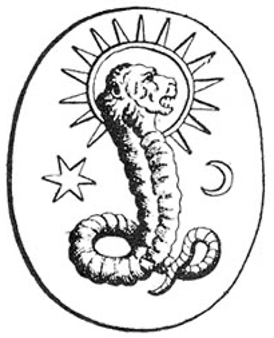
Notes on the Basics of Gnosticism            The Gnostics were an early sect of Christianity who had various beliefs, scriptures, and branches. Gnosticism derived its name from the Greek word “gnosis” which means knowledge. However, for them it signified an intimate, experiential knowledge of the divine and esoteric wisdom that are necessary for liberation. The Gnostics generally claimed that this world was created by a false God known as the Demiurge who is the god of the Hebrew Bible and is an evil vengeful god. While the Demiurge claims to be the highest God, in reality it is a creation of an emanation or Aeon, Sophia, of the absolutely transcendent real God, the Monad or the Neoplatonic idea of the One. Human beings are essentially divine spirits trapped within physical bodies and through proper gnosis or knowledge, one can achieve spiritual enlightenment and salvation and this gnosis was taught by Jesus Christ. In their cosmology, Aeon...
Notes on the Basics of Neoplatonism

Image
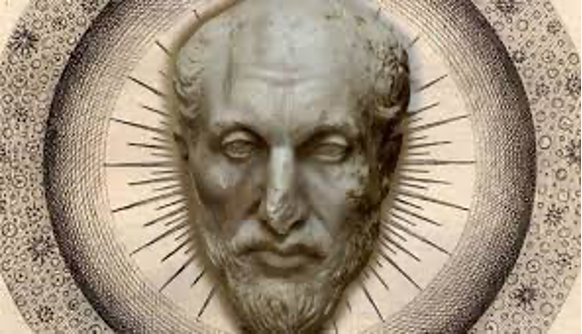
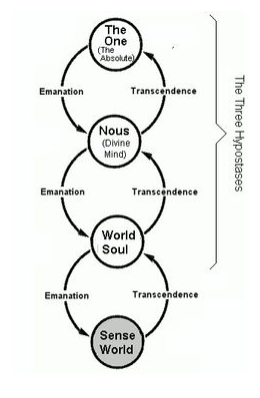
Notes on the Basics of Neoplatonism   Neoplatonism revolves around the idea of an all-powerful transcendent divinity, The One, and its emanation. The movement was founded by the Greek Platonist philosopher, Plotinus (204-270 AD). According to The Enneads , Plotinus’ primary text of Neoplatonism, The One is an omnipotent force which exists beyond all categories and is the single source of light from which the entire universe is illuminated. The One, however, is not directly the creator of our universe. Rather, The One represents a higher level of divinity and reality than the Demiurge or the divine intellect which is the creative element of the divine and a manifestation of the radiance of The One which permeates the lower levels of the cosmos which are visible to man. The One is so simple such that it does not contain any parts or be divided and beyond reality that it cannot even be said to exist or to be a being since it is utterly beyond. The system can be divided between the inv...

The Paradox of Multiplicity in Divine Simplicity

Image
The Paradox of Multiplicity in Divine Simplicity According to many Aristotelian philosophers, all bodies have the inseparable property of motion and it does not proceed from the nature of bodies themselves and thus motion demands an external source or a prime mover. The series of moving causes must stop at an immovable object that moves everything else to avoid an infinite regress of movers. This first mover is God. Since the transition from non-existence to existence is a form of motion and motion requires matter then God must be immaterial and eternal while all things created by it are material and in motion. God is free from matter and therefore is free from motion and therefore cannot change and therefore is pure act ( actus purus ) and also therefore God must be completely simple as God is not made of parts. Now the question is in regards to creation, how can the many be created by one or how can something like God who is completely simple create multiplicity or how can a single c...