Posts

Showing posts with the label Phenomena

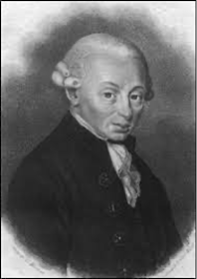
Notes on the Basics of Kant 4: Kantian Ethics Explained
Image
Notes on the Basics of Kant 4: Kantian Ethics Explained According to Kant, in his, Groundwork on the Metaphysics of Morals , there is only one thing that is good in itself which is The Good Will. Everything else has to be qualified, The Good Will is the only good without qualification. While other things can be good, The Good Will is good in itself. Being intelligent can be a good thing but one could also use their intelligence for evil if The Good Will is not present. Courage can be good to save someone out of a burning building but a thief can have courage when robbing a bank. Being healthy can be good but without having a Good Will they can spoil the individual with pride. Having good virtues such as moderation is a step in the right direction but they need to be directed by having a Good Will. Jeremy Bentham would say that the Good Will is that which leads to the best consequences or utility for the greatest number of people. However, according to Kant it is not about the effect b...
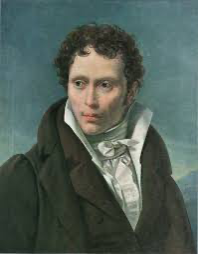
Notes on the Basics of Schopenhauer

Image
Notes on the Basics of Schopenhauer         Arthur Schopenhauer (1788-1860) was a German philosopher known for his pessimistic philosophy which is exemplified in his work, “The World as Will and Representation”. Schopenhauer’s metaphysics drew from Kant whom I have several blog posts on but in short, Kant believed in the Noumena-Phenomena distinction or Transcendental Idealism. Phenomena are the things we perceive through our senses which are shaped by our mind’s faculties and subject to the categories of understanding. Noumena, on the other hand, are things as they are in themselves that are beyond human perception and conceptualization. Kant argues that while we can understand phenomena through empirical investigation, we can never truly know noumena because they lie beyond the limits of human cognition. Thus, noumena represent the realm of things as they exist independently of our perception that are ultimately unknowable. Since we can never know the t...

Kantian Idealism and the Quest for Ultimate Reality

Image
Kantian Idealism and the Quest for Ultimate Reality   I pondered over Kant and his philosophy of transcendental idealism and then contemplated Descartes and discovered they have significant overlap. Kant claimed we cannot know the world in itself i.e. the noumena but only have knowledge of the world as it appears to us i.e. the phenomena. Then I drew a parallel of this idea to Descartes’ radical doubt which claimed that we cannot know if the external world exists or not, but the one thing we have epistemological certainty of is Cogito Ergo Sum or I think therefore I am. The overlap being lack of true knowledge of the external world. Then I thought about how religion can be incorporated. It is explicit in Descartes that the external world is clear through his faith in God through his ontological argument but for Kant such a thing is absurd as he believes philosophizing about God is beyond the scope of what philosophy can accomplish and therefore he rejects cosmological and ontologi...

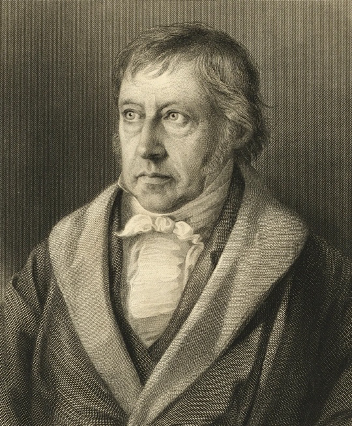
Notes on the Basics of Hegel Part 2: Breakdown of the Phenomenology of Spirit

Image
Notes on the Basics of Hegel Part 2: Breakdown of the Phenomenology of Spirit     Hegel began by outlining the purpose of the work, the need for a systematic study of consciousness and self-consciousness. He suggests that the goal is to understand the development of human knowledge and to grasp the truth of this knowledge. Hegel sought to understand the unfolding of human thought over time. He believed that history was a rational process, and by tracing the development of consciousness, one could grasp the inherent logic and progression of human knowledge. Hegel introduced a dialectical method, which involves the resolution of contradictions through a process of thesis, antithesis, and synthesis. This method allows for the dynamic development of thought, revealing the inherent contradictions within each stage and the synthesis that emerges. In examining consciousness and self-consciousness dialectically, Hegel reveals the internal conflicts and contradictions inherent in vari...